
Quick Answer : When your roof starts leaking, protect the interior first by moving valuables, catching water, and avoiding unsafe roof access. Then call an emergency roof repair contractor in NYC to inspect the damage, stop active water intrusion, and plan a permanent repair.
When water starts entering your home, emergency roof repair NYC homeowners can trust becomes urgent. A roof leak is never something to ignore, even when the drip looks small. Water can move behind ceilings, damage insulation, stain walls, weaken decking, affect electrical systems, and create mold concerns if the source is not handled quickly.
An emergency roof leak NYC property owners experience can happen after heavy rain, strong wind, snow, ice dams, fallen debris, clogged drains, or old roofing materials finally giving way. In New York City, roofs face added stress from dense buildings, flat roof systems, aging structures, rooftop equipment, skylights, chimneys, and sudden weather changes.
Delaying repairs can turn a manageable leak into a larger restoration project. Temporary steps may help protect the interior, but they do not replace professional leak detection and permanent roofing work. This guide explains what causes emergency leaks, what to do first, how to reduce interior damage, what temporary repairs may help, and when experienced NYC roofers should be called.
Common Causes of Emergency Roof Leaks in NYC Homes
An emergency roof leak NYC homeowners deal with usually begins before water appears indoors. In many cases, the roof has already been weakened by storms, aging materials, flashing failure, clogged drainage, or previous repairs that no longer hold. Once heavy weather arrives, that weak area can open quickly.
Storm Damage After Heavy Rain, Wind, and Snow
Storm damage is one of the most common reasons roof leaks appear suddenly. Heavy rain can expose weak spots around flashing, roof valleys, seams, skylights, drains, and gutters. If water cannot move away properly, it may back up and enter the roof system.
Strong winds can lift shingles, loosen edge materials, pull flashing out of place, and move debris across the roof. On flat roofs, wind-driven rain may push water into seams, parapet walls, or roof penetrations. Even when the roof looks normal from the ground, lifted materials may allow water underneath.
Snow and ice can also create emergency conditions. Snow adds weight. Ice can block gutters and drains. As temperatures rise and fall, freeze-thaw cycles can widen small cracks. Over time, these conditions can turn minor damage into an active leak.
Aging Roofing Materials and Flashing Failure
Older roofing materials become less dependable as they lose flexibility and strength. Asphalt shingles may curl, crack, lose granules, or loosen. Flat roof membranes may develop open seams, punctures, blisters, or weak areas around drains and roof edges.
Flashing failure is another major cause of leaks. Flashing protects roof transitions, including chimneys, skylights, vents, sidewalls, parapet walls, and roof edges. When flashing cracks, rusts, lifts, or separates, water can enter even if the main roofing surface still looks acceptable.
Seal deterioration can also create hidden problems. Old sealant around vents, skylights, pipes, and masonry transitions may dry out or split. During a storm, water finds these weak points quickly.
Damaged Skylights, Chimneys, and Roof Penetrations
Skylights are useful, but they are also common leak points when flashing, seals, or surrounding roofing materials fail. A skylight leak may appear as water stains around the frame, dripping from the ceiling, or damp drywall nearby.
Chimneys can also allow water entry. Cracked masonry, damaged chimney flashing, worn mortar joints, and missing caps can all contribute to roof leaks. Sometimes the roof gets blamed when the real issue begins at the chimney connection.
Vent pipes, exhaust openings, plumbing stacks, and other penetrations must also stay sealed. If a vent boot cracks or flashing around a penetration fails, water may enter directly into the attic or ceiling cavity.
What to Do Immediately During an Emergency Roof Leak in NYC
During emergency roof repair NYC situations, the first priority is safety. Homeowners often want to stop the leak right away, but climbing onto a wet, icy, storm-damaged, or dark roof can be extremely dangerous. The safest first steps happen inside the home.
Protect Your Family and Electrical Systems
Move people, pets, and valuables away from the affected area. If water is dripping near outlets, light fixtures, appliances, breaker panels, or wiring, avoid touching the area. Water and electricity are a serious hazard.
If it is safe and necessary, turn off electricity to the affected area from the breaker panel. However, do not step into standing water or touch electrical equipment if you are unsure. In that situation, call a qualified professional or emergency service.
Stay away from sagging ceilings. Water can collect above drywall and cause the ceiling to collapse without much warning. If a ceiling is bulging, cracking, or dripping heavily, keep everyone clear of the area.
Minimize Interior Water Damage
Once people are safe, reduce interior damage where possible. Move furniture, rugs, electronics, documents, clothing, and valuables away from the leak area. If large items cannot be moved, cover them with plastic sheeting or waterproof material.
Place buckets, containers, or towels under active drips. If water is spreading across the floor, use towels or a wet vacuum if it can be done safely. Avoid using electrical cleaning equipment near standing water unless the area is safe and the equipment is designed for that use.
Take photos and videos of the leak, ceiling stains, wet floors, damaged belongings, and visible roof damage if it can be documented safely. This can help when discussing the problem with a roofing contractor or insurance provider.
Apply Safe Temporary Roof Repair Measures
Temporary roof repair may help reduce damage until professionals arrive. Inside the home, plastic sheeting, buckets, towels, and containment can help control water. In some cases, a tarp may be installed over the exterior roof, but this should only be done when conditions are safe.
Homeowners should never climb onto a wet, icy, steep, high, or storm-damaged roof. They should also avoid walking on sagging areas, stepping near skylights, or trying to remove large debris during bad weather.
Temporary materials are not permanent roof repairs. A tarp, plastic sheet, or sealant may slow water entry, but the leak source still needs professional inspection and repair.
| Emergency Step | Why It Matters | Safe Homeowner Action |
| Move people away | Protects family and pets from falling ceiling material or electrical hazards | Clear the affected room |
| Watch electrical risks | Water near wiring can be dangerous | Turn off power only if safe |
| Contain dripping water | Reduces floor and furniture damage | Use buckets, towels, and plastic |
| Document damage | Helps with estimates and possible claims | Take photos and videos safely |
| Avoid roof climbing | Wet roofs create major fall risk | Wait for trained roofers |
| Call a roofer quickly | Fast inspection limits damage | Request emergency service |
How NYC Weather Creates Emergency Roofing Problems
Storm roof damage NYC property owners face is often connected to sudden weather shifts. A roof may appear fine for months, then fail during one heavy storm because older materials, poor drainage, or weak flashing finally reach their limit.
Heavy Rain and Flash Flood Conditions
Heavy rain can overwhelm weak roofing systems. When rain falls faster than drains, gutters, or scuppers can move it away, water may collect around roof edges, flat roof low spots, skylights, and penetrations.
On flat roofs, standing water can spread across seams and weak areas. If the membrane has small cracks or punctures, water may enter below the surface. On shingle roofs, wind-driven rain can move under lifted shingles or damaged flashing.
Flash flood conditions can also expose gutter and drainage issues. Clogged gutters may overflow, downspouts may back up, and water may run down siding or masonry instead of away from the building.
Snow, Ice Dams, and Freeze-Thaw Cycles
Snow and ice create emergency roof problems in a different way. Snow can sit on flat roofs or shaded roof areas. When it melts and refreezes, water may become trapped near edges, gutters, drains, or flashing.
Ice dams can force water backward under shingles or into roof transitions. Frozen gutters can block drainage and cause water to overflow near the roofline. As ice expands, it may widen small openings around flashing or roofing materials.
Freeze-thaw cycles are especially hard on older roofs. Water enters small gaps, freezes, expands, and makes the gap larger. After several cycles, a small weakness can become a serious leak.
High Winds That Remove Roofing Materials
High winds can remove or loosen roofing materials. Shingles may lift, tabs may break, and roof edges may become exposed. On flat roofs, wind can pull at loose membrane edges, flashing, coping, or rooftop materials.
Wind can also send branches, trash, metal pieces, or construction debris onto the roof. Even a small puncture in a flat roof membrane can cause water intrusion during the next rain.
After a strong wind event, homeowners should inspect safely from the ground. Missing shingles, loose gutter sections, fallen debris, or visible roof gaps should be addressed quickly.
Signs Your NYC Roof Needs Immediate Emergency Repair
A roof leak is not the only sign that emergency service may be needed. Some warning signs show that water damage or structural risk may already be developing. Fast leaking roof repair can help limit the damage before it spreads.
Water Stains on Ceilings and Walls
Ceiling stains often appear before active dripping starts. Brown rings, yellow marks, peeling paint, bubbling drywall, and damp wall areas may all indicate roof water intrusion.
A small stain should still be taken seriously. Water may have traveled through insulation, framing, or ceiling cavities before becoming visible. The actual leak source may be far from the stain.
If a stain grows after rain or snow melt, the leak is likely active. A professional inspection should be scheduled before the next storm causes more damage.
Active Dripping and Ceiling Sagging
Active dripping means water is already inside the building. This situation should be treated as urgent, especially if the leak is near electrical fixtures, walls, or finished rooms.
Ceiling sagging is even more serious. Water may be collecting above the drywall. If the ceiling bulges, cracks, or feels soft, it may collapse. Do not poke or stand beneath a sagging ceiling unless you have been advised by a professional and the area is safe.
The safest step is to move people and valuables away, contain water if possible, and call for emergency roof repair.
Missing Roofing Materials After a Storm
Missing shingles, loose flashing, broken gutters, damaged skylight flashing, or exposed roof areas after a storm can lead to immediate leaks. Even if water has not entered yet, exposed materials should be repaired before more rain arrives.
On flat roofs, missing edge flashing, lifted membrane sections, punctures, or damaged scuppers can create fast water intrusion. These issues may not be obvious from the street, so a professional roof inspection may be needed after severe weather.
Visible storm damage should not be ignored. Early repair is usually less expensive than waiting for interior damage.
Temporary Roof Repair Solutions Before Professionals Arrive
Temporary roof repair is meant to reduce damage, not solve the full roofing problem. The goal is to protect the home until a roofing contractor can inspect the source and complete a permanent repair.
Emergency Roof Tarp Installation
A roof tarp can help cover damaged areas after storms, falling debris, or sudden leaks. However, tarp installation can be risky because it often requires roof access. Wet surfaces, wind, steep slopes, and damaged decking can make the job unsafe.
If a tarp can be installed safely by professionals, it may reduce water entry until permanent repairs are completed. The tarp should cover the damaged area properly and be secured so wind does not pull it loose.
Homeowners should avoid using bricks, heavy objects, or improper fasteners that may damage the roof further. A poorly installed tarp can create more problems if water gets trapped or the tarp shifts during wind.
Interior Water Damage Prevention
Interior protection is often the safest temporary step for homeowners. Move belongings away, cover furniture, collect dripping water, and dry wet surfaces when safe.
If water is entering through a light fixture, do not touch the fixture. Turn off power to that area if it is safe to reach the breaker. If there is any doubt, call emergency help.
Ventilation may help dry damp areas after the leak is controlled, but moisture inside walls, insulation, or ceiling cavities may still require professional drying. Mold can develop when wet materials stay damp.
Why DIY Repairs Can Make the Situation Worse
DIY roof repairs can make emergency leaks worse when the wrong material is used or the source is misunderstood. Applying sealant over wet, dirty, or damaged materials may trap moisture. Walking on a weak roof may cause more damage. Covering the wrong area may allow the leak to continue.
Flat roofs are especially tricky because water can travel under the membrane before appearing indoors. A visible drip does not always reveal the entry point.
DIY work also creates safety risks. During an emergency, the roof may be wet, slippery, unstable, or damaged by wind. Professional roofers have the tools, materials, and experience to inspect and repair the problem more safely.
Emergency Roof Repair Process for NYC Roofing Contractors
A professional emergency roof repair NYC process should move quickly but still follow a careful inspection and repair plan. The goal is to stop active damage, identify the source, and provide a repair that lasts.
Emergency Roof Inspection
The contractor begins by inspecting the affected area. This may include the roof surface, attic, ceilings, walls, gutters, drains, flashing, skylights, chimneys, and roof penetrations.
Emergency inspections focus on finding the active water entry point and identifying any immediate safety concerns. If weather conditions prevent full repair, temporary protection may be installed first.
Photos and notes are often helpful. They show the damage, explain the repair need, and create a record for the property owner.
Locating Hidden Leak Sources
Roof leaks can be difficult to trace. Water may enter through one area, travel along framing or insulation, and appear somewhere else indoors. This is why guessing often leads to repeated repairs.
A contractor may check flashing, roof seams, membrane punctures, missing shingles, drain areas, skylight edges, chimney connections, and previous repair patches. On flat roofs, ponding water and clogged drains may also reveal the cause.
Hidden sources should be found before permanent repair begins. Otherwise, the visible leak may return during the next storm.
Permanent Roof Repair or Roof Replacement
Once the leak source is confirmed, the contractor recommends the right repair. Small issues may need flashing repair, shingle replacement, membrane patching, drain cleaning, skylight sealing, gutter repair, or masonry-related work.
More serious damage may require partial replacement or full roof replacement. If the roof is old, repeatedly leaking, structurally damaged, or failing in multiple areas, another patch may not provide good value.
A professional should explain whether repair or replacement makes more sense based on roof age, condition, material type, and damage level.
Final Safety Inspection and Water Testing
After repairs are completed, the contractor should inspect the work. Roof edges, flashing, seams, drainage, gutters, and penetrations should be checked to make sure the repair is secure.
In some cases, controlled water testing may be used to confirm that the leak has been addressed. This should be done carefully so water is not forced into areas that would not normally leak.
The final review gives the homeowner confidence that the emergency has been handled properly.
Roof Components Most Frequently Damaged During NYC Storms
Storm roof damage NYC property owners experience can affect many parts of the roofing system. The visible roof surface is important, but leaks often begin at edges, transitions, drains, or exterior components.
Asphalt Shingles
Asphalt shingles may crack, curl, lift, or go missing after wind and storms. Hail or debris can bruise the surface. Older shingles are more vulnerable because they become brittle with age.
If only a few shingles are damaged, repair may be possible. However, widespread shingle failure can point to a roof near the end of its useful life.
Shingle repairs should also include flashing checks. Replacing shingles without inspecting nearby flashing may not solve the leak.
Flat Roofing Systems: EPDM and TPO
Flat roofing systems are common across NYC, especially on brownstones, townhouses, apartment buildings, and commercial properties. EPDM and TPO roofs can perform well, but they must remain properly sealed and drained.
Storms may damage flat roofs through punctures, seam stress, membrane lifting, clogged drains, ponding water, or damaged flashing. Rooftop equipment and debris can also create puncture risks.
A flat roof leak may spread below the membrane before becoming visible indoors. That is why professional leak diagnostics are important after storm damage.
Gutters, Flashing, Skylights, and Masonry
Gutters can clog, sag, detach, or overflow during storms. When gutters fail, water may back up along the roof edge and enter vulnerable areas.
Flashing around chimneys, skylights, vents, walls, and parapet areas is also frequently damaged. If flashing moves even slightly, water can enter during wind-driven rain.
Masonry can contribute to leaks as well. Cracked mortar, damaged chimney crowns, weak parapet walls, or failed coping can allow water to enter near the roofline. A complete emergency inspection should consider all these components together.
Preventing Future Roof Leaks Through Routine Maintenance
The best way to reduce emergency roofing problems is routine maintenance. Some storm damage cannot be avoided, but many leaks become emergencies because small issues were missed earlier.
Schedule Regular Roof Inspections
A roof should be inspected regularly and after major storms. Inspections help find loose shingles, cracked flashing, membrane wear, clogged drains, weak sealants, and early water stains.
For NYC properties with flat roofs, inspections are especially important because drainage problems can develop quickly. Ponding water, blocked scuppers, clogged drains, and debris buildup can all lead to leaks.
A professional inspection gives homeowners a clear understanding of roof condition before an emergency happens.
Keep Gutters and Roof Drains Clear
Gutters, downspouts, scuppers, and roof drains must stay clear so water can move away. Debris buildup can cause overflow, ice formation, ponding water, and roof edge leaks.
Cleaning is especially important before storm season and winter. Leaves, dirt, branches, roofing granules, and trash should be removed from drainage paths.
Good drainage is one of the simplest ways to prevent emergency roof leaks.
Replace Damaged Roofing Materials Early
Small roof damage should be repaired before it spreads. Missing shingles, cracked sealant, loose flashing, punctured membrane areas, and damaged vent boots can all become leak points.
Early replacement of damaged materials is usually more affordable than emergency service after water enters the home.
A roofing contractor can identify which areas need immediate attention and which areas can be monitored.
Prepare Your Roof Before Storm Season
Storm preparation should include gutter cleaning, drain inspection, flashing checks, debris removal, and trimming nearby branches. Flat roofs should be checked for ponding water and membrane damage.
Homeowners should also inspect interior ceilings and attic spaces for early signs of moisture. Catching a small stain before the next storm can prevent a larger leak.
A roof that is prepared before severe weather is more likely to handle heavy rain, wind, snow, and ice without emergency damage.
Conclusion: Respond Quickly to Emergency Roof Leaks Before Damage Spreads
Every roof leak should be treated as urgent. A small drip can quickly become ceiling damage, mold growth, wet insulation, damaged flooring, structural stress, and expensive repairs. Temporary repairs may help reduce immediate damage, but they do not replace professional leak detection and permanent roofing work.
Fast inspections help identify the true source before water spreads further. Whether the problem comes from storm damage, missing shingles, flat roof membrane failure, clogged drains, damaged flashing, skylight leaks, or aging materials, the repair should be handled correctly the first time.
Routine maintenance also lowers the risk of future emergency roofing problems. Regular inspections, clean gutters, clear roof drains, early material repairs, and pre-storm preparation can help protect your home throughout the year.
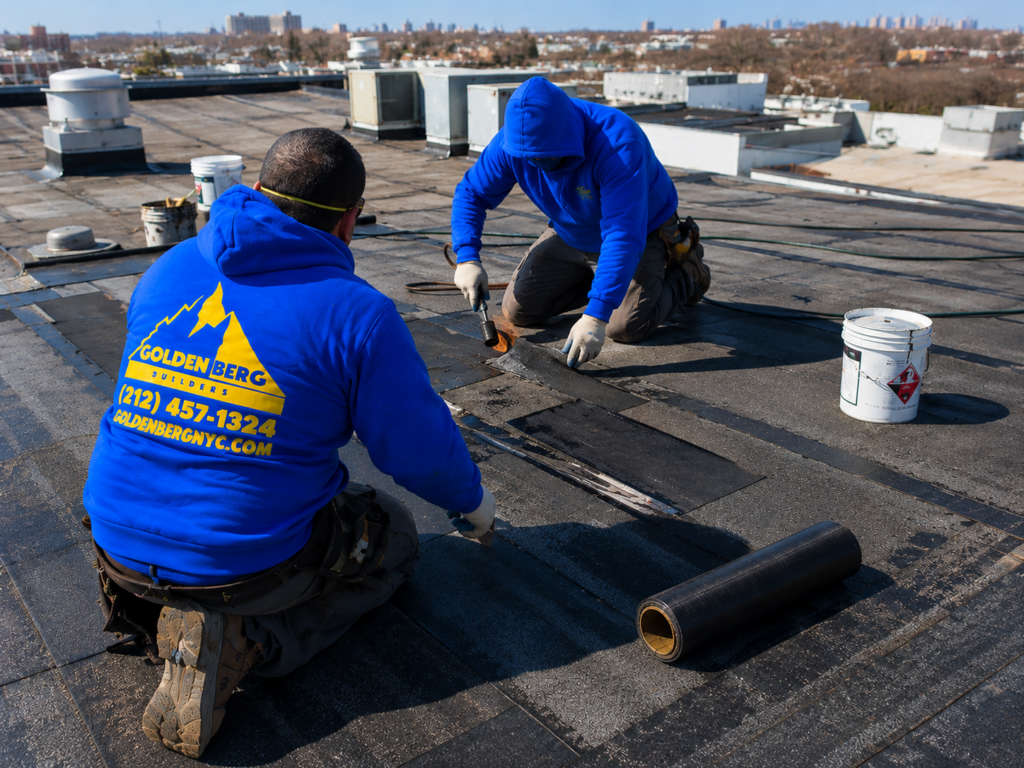
Need emergency roof repair in NYC? Goldenberg Roofing NYC provides fast emergency roof inspections, temporary protection, roof leak repair, flat roof repair, roof replacement, gutter work, siding, and masonry services throughout NYC. Do not wait for a small leak to become major structural damage. Call Goldenberg Roofing NYC today at (212) 457-1324 to request 24/7 emergency roof repair in NYC, or visit us at 1274 5th Ave, New York, NY 10029.
FAQs: Emergency Roof Repair in NYC
How do I know if I need emergency roof repair in NYC?
You may need emergency roof repair in NYC if water is actively leaking into your home, the ceiling is sagging, shingles or roof materials are missing after a storm, flashing is damaged, gutters are overflowing near the roofline, or a flat roof has sudden ponding and interior water stains. Any leak near electrical systems should be treated as urgent.
What should I do first if my roof starts leaking during heavy rain?
First, protect your family and stay away from electrical hazards or sagging ceilings. Move furniture and valuables away from the leak, place buckets under dripping water, cover items with plastic, and document the damage with photos if it is safe. Then call a professional roofing contractor for emergency inspection and repair.
Can a temporary roof repair stop a leak until permanent repairs are completed?
A temporary roof repair may reduce water entry until permanent repairs are completed. Tarps, plastic sheeting, buckets, and interior containment can help limit damage. However, temporary repairs do not solve the root problem and should always be followed by a professional roof inspection and proper repair.
How quickly can emergency roof repair services respond after storm damage in NYC?
Response time depends on weather conditions, storm severity, roof access, and contractor availability. During major storms, many property owners may need help at the same time. Calling quickly and explaining the leak location, roof type, and visible damage can help the roofing team prioritize the situation.
Does homeowners insurance typically cover emergency roof leak repairs?
Homeowners insurance may cover emergency roof leak repairs when the damage is caused by a covered event, such as sudden storm damage. Coverage depends on the policy, roof age, cause of damage, deductible, and exclusions. Homeowners should document the damage, contact their insurer, and request a professional roof inspection.
Should I repair my leaking roof or replace it after severe storm damage?
The decision depends on the roof’s age, damage level, material condition, leak history, and inspection results. Minor storm damage may only need repair, while widespread material failure, recurring leaks, structural damage, or an aging roof may make replacement the better long-term investment.
How can I prevent emergency roof leaks during future NYC storms?
You can reduce the risk of emergency roof leaks by scheduling regular roof inspections, keeping gutters and drains clear, repairing damaged shingles or flashing early, checking skylights and chimneys, trimming nearby branches, and preparing the roof before storm season and winter weather arrive.