
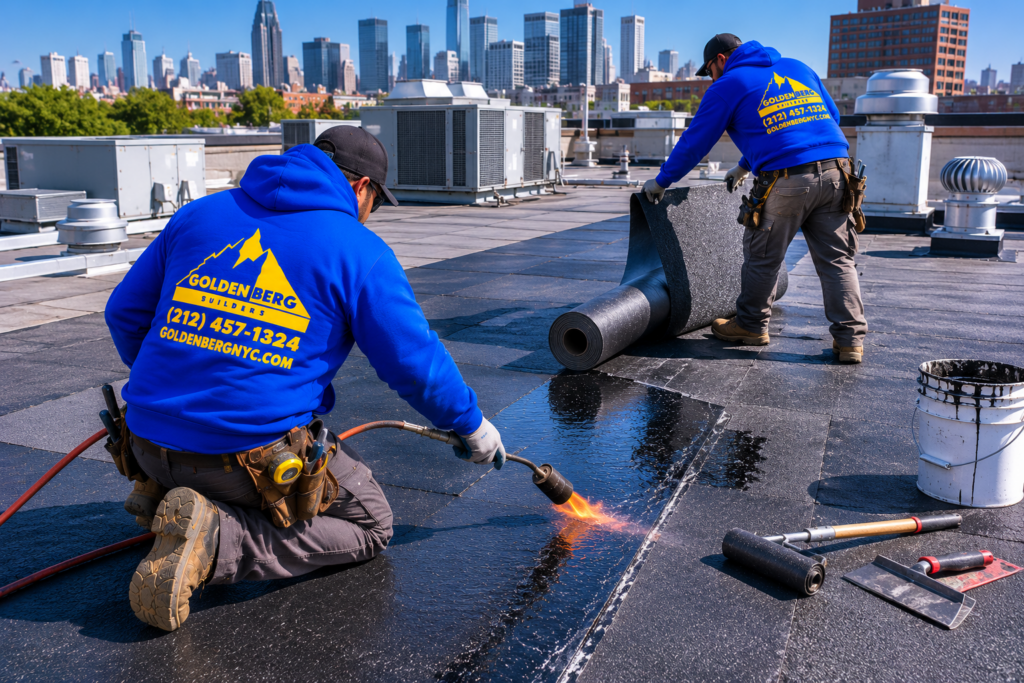
Quick Answer : To choose the right roofing contractor in NYC, look for a licensed, insured, and locally experienced company with strong reviews, written estimates, clear warranty terms, and proven knowledge of NYC roof systems. The best contractor should understand flat roofs, drainage issues, permits, safety requirements, and the specific roofing needs of city buildings.
Choosing the right roofing contractor NYC property owners can trust is one of the most important decisions you can make for your home, building, or commercial property. A roof in New York City does more than cover a structure. It protects interior spaces, supports building value, manages weather exposure, and helps prevent costly water damage.
NYC roofing work is also different from basic residential roofing in many other areas. Many buildings have flat roofs, parapet walls, aging drainage systems, rooftop access points, skylights, masonry details, and limited work space. Because of this, hiring someone without real local experience can lead to poor repairs, permit issues, unsafe work, or repeated roof leaks.
This complete hiring guide will help you understand what to check before hiring a roofing contractor in NYC. You will learn how to verify licensing, compare estimates, review warranties, ask the right questions, avoid common mistakes, and choose a roofing company that can protect your property for the long term.
Why Choosing the Right Roofing Contractor Matters in NYC
Hiring a roofing contractor in NYC is not just about finding someone who can install shingles or patch a leak. The right contractor understands city buildings, roof systems, weather patterns, safety requirements, and the importance of completing work correctly the first time.
NYC’s Unique Roofing Challenges
New York City has a wide mix of residential, multi-family, commercial, and mixed-use properties. Some buildings have asphalt shingle roofs, while many Manhattan and NYC properties use flat roofing systems. Brownstones, townhouses, apartment buildings, co-ops, and older structures often need a different level of roof planning than standard suburban homes.
Weather also adds pressure. Heavy rain, high winds, snow, ice, summer heat, and freeze-thaw cycles can weaken roofing materials over time. On flat roofs, drainage issues can cause ponding water, membrane wear, and leaks near seams or flashing. Older buildings may also have aging masonry, outdated roof layers, or poor previous repairs.
Because of these challenges, a contractor must understand the full roofing system, not just the visible surface.
Local Building Codes and Permit Requirements
Roofing work in NYC may involve building code requirements, permit rules, safety regulations, and inspection standards. A proper contractor should know when permits are needed and how the work must be completed to meet city expectations.
Code-compliant installation matters because roofing problems can affect more than the roof itself. Poor flashing, improper drainage, weak materials, or unsafe installation can create water intrusion, structural concerns, and future repair costs. When a contractor understands local requirements, the project is more likely to move forward smoothly.
Why Local Roofing Experience Makes a Difference
Local roofing experience helps contractors recognize borough-specific issues faster. A contractor who regularly works on Manhattan flat roofs, Brooklyn brownstones, Queens residential homes, or Bronx apartment buildings will usually understand common roof designs, access challenges, and material needs.
Local experience can also make scheduling, inspections, material planning, and communication easier. Instead of guessing, an experienced NYC roofer can explain what your building needs and why a certain solution makes sense.
Signs It’s Time to Hire a Roofing Contractor in NYC
Roof problems are easier to control when they are handled early. Waiting too long can allow water to spread behind walls, damage insulation, weaken decking, or create interior repairs that cost far more than a roof inspection.
Persistent Roof Leaks and Interior Water Damage
A roof leak should never be ignored, especially in NYC buildings where water can travel through ceilings, walls, and shared structures. Stains on ceilings, bubbling paint, damp drywall, musty odors, or dripping water after rain may all point to a roof problem.
Even a small leak can become serious if the source is not found. A roofing contractor can inspect flashing, seams, drains, roof penetrations, skylights, and the roof surface to identify the real cause.
Missing, Curling, or Broken Shingles
For sloped roofs, damaged shingles are a clear warning sign. Missing, curling, cracked, or loose shingles can expose the roof deck to water. Once the underlayment is affected, leaks can develop quickly.
Shingle damage may happen because of age, wind, poor installation, or storm impact. If the damage is limited, repair may be enough. However, if large areas are affected, replacement may be the smarter long-term option.
Aging Roofing Systems Near the End of Their Lifespan
Every roofing system has a service life. As materials age, they lose flexibility, strength, and weather resistance. Flat roof membranes may crack, blister, separate at seams, or become weak around flashing. Shingle roofs may lose granules, curl, or become brittle.
If your roof is near the end of its expected lifespan, a professional inspection can help you decide whether repairs are still practical or whether replacement is more cost-effective.
Storm, Wind, and Hail Damage
Storms can damage roofs even when the problem is not visible from the ground. High winds may lift shingles, loosen flashing, move debris, or damage roof edges. Hail can bruise shingles, dent metal components, or weaken flat roofing materials.
After a severe storm, it is smart to schedule an inspection before minor damage becomes a leak. This is especially important for property owners who may need documentation for insurance purposes.
Flat Roof Drainage and Ponding Water Issues
Flat roofs are common in NYC, but they require proper drainage. Water that remains on the roof after rain can stress the membrane, speed up material wear, and increase the risk of leaks.
Ponding water may be caused by clogged drains, poor slope, blocked gutters, sagging areas, or previous installation problems. A skilled roofing contractor can inspect the drainage pattern and recommend repairs before the roof becomes more damaged.
How to Verify a Licensed Roofing Contractor in NYC
Before hiring any contractor, verification is one of the most important steps. A professional appearance or low estimate is not enough. You need to confirm that the company has proper credentials, insurance, experience, and a clear process.
Proper Licensing, Insurance, and Business Registration
A licensed roofing contractor NYC property owners hire should be able to provide proof of licensing, insurance, and business registration when requested. Insurance is especially important because roofing work carries risk. If a worker is injured or property damage occurs, you do not want to be left responsible because the contractor was not properly covered.
Ask for proof of general liability insurance and workers’ compensation coverage. Also, make sure the business name on documents matches the company you are hiring. This simple step helps reduce risk before the project begins.
Manufacturer Certifications and Professional Affiliations
Manufacturer certifications can show that a contractor has been trained to install certain roofing materials properly. This matters because some warranties may depend on correct installation by qualified professionals.
Professional affiliations are also useful, although they should not be the only deciding factor. They can indicate that a contractor takes industry standards seriously and stays connected to roofing best practices.
Proven Local Experience with NYC Roofing Projects
A contractor should be able to explain their experience with NYC roof types. Flat roofs, EPDM, TPO, modified bitumen, shingle roofs, skylights, gutters, masonry, and roof drainage all require different skills.
Ask whether they have worked on buildings similar to yours. A contractor experienced with townhouses, brownstones, co-ops, apartment buildings, and commercial properties will likely understand access restrictions, roof layout issues, and local project planning better than someone without city experience.
Customer Reviews, Ratings, and References
Reviews can tell you how a company communicates, shows up, solves problems, and handles follow-up. Look beyond the star rating. Read what customers say about timing, cleanup, honesty, pricing, and workmanship.
References are also helpful for larger projects. A reliable contractor should be comfortable sharing examples of completed work or connecting you with past customers when appropriate.
Written Workmanship and Manufacturer Warranties
A roofing warranty should be clear before work starts. There are usually two main types of coverage. One comes from the manufacturer for materials, and the other comes from the contractor for workmanship.
Ask what is covered, how long coverage lasts, and what may void the warranty. A strong warranty is only useful when the terms are written and easy to understand.
Essential Questions to Ask Before Hiring a Roofing Contractor in NYC
The questions you ask before hiring can prevent confusion later. A trustworthy contractor should answer clearly and explain the project in a way that helps you make an informed decision.
Can You Provide Local References?
Local references help you understand how the contractor performs on real NYC projects. Ask for examples from similar buildings or nearby neighborhoods when possible.
This is especially useful for flat roofs, older buildings, and larger replacement projects where experience matters.
Are You Fully Licensed and Insured?
Do not rely on verbal promises. Ask for documentation. A professional contractor should be prepared to show proof of licensing, liability insurance, and workers’ compensation.
This protects both the property owner and the contractor.
Which Roofing Materials Do You Recommend?
A contractor should not recommend materials without inspecting the roof. The right material depends on roof type, slope, drainage, budget, building use, and long-term goals.
For example, a flat commercial roof may need TPO or EPDM, while a residential sloped roof may need asphalt shingles.
What Is the Project Timeline?
Roofing timelines depend on roof size, weather, access, material availability, and project complexity. Ask when work can begin, how long it may take, and what delays could happen.
Clear timing helps property owners plan around noise, access, tenants, business hours, or building rules.
What Warranties Are Included?
Ask about both workmanship and material warranties. Also ask whether warranty terms are included in the written contract.
This helps avoid confusion if a future repair is needed.
Understanding Roof Estimates in NYC Before You Sign
A roof estimate NYC property owners receive should be detailed enough to compare clearly. A vague estimate can lead to unexpected costs, unclear responsibilities, and problems during the project.
What Should Be Included in a Roof Estimate?
A proper estimate should explain the scope of work, roofing materials, labor, removal or disposal needs, permit costs if applicable, timeline, payment schedule, warranty details, and cleanup responsibilities.
The estimate should also identify whether the project is a repair, partial replacement, full replacement, coating, flashing repair, drainage correction, or emergency service.
Material, Labor, and Permit Costs Explained
Material costs depend on the roofing system. Shingles, TPO, EPDM, modified bitumen, flashing, insulation, gutters, and decking all have different pricing. Labor costs depend on the difficulty of the job, roof access, safety setup, and the amount of preparation required.
Permit costs may also be part of the project when required. A transparent contractor will explain these items instead of giving one unclear number.
How Roof Size, Pitch, and Complexity Affect Pricing
Larger roofs usually cost more because they require more materials and labor. However, size is not the only factor. A small roof with difficult access, several penetrations, skylights, parapet walls, or drainage problems may cost more than a simple larger roof.
Pitch also matters for sloped roofs. Steeper roofs can require extra safety measures and more labor time. Flat roofs may require added drainage planning, insulation work, or membrane detailing.
Hidden Charges Homeowners Should Watch For
Hidden charges often appear when estimates are too vague. These may include disposal fees, permit fees, decking replacement, flashing work, material upgrades, emergency charges, or cleanup costs.
Before signing, ask what could change the final price. A professional contractor should explain possible add-ons and how they will be approved before extra work is completed.
| Estimate Item | Why It Matters |
| Scope of work | Shows exactly what the contractor will repair or replace |
| Material type | Helps compare quality between estimates |
| Labor details | Explains installation and preparation costs |
| Permit or inspection costs | Helps avoid surprise city-related expenses |
| Warranty terms | Protects the property after completion |
| Payment schedule | Reduces confusion before work starts |
How to Compare Roofing Companies in NYC
Finding the best roofing company NYC property owners can rely on means comparing more than price. The right contractor should offer strong value, clear communication, verified credentials, and proven work.
Price Versus Overall Value
The lowest bid is not always the best choice. A cheap estimate may leave out key items, use weaker materials, skip permits, or provide limited warranty protection.
Instead, compare the full value. Look at material quality, workmanship, warranty coverage, communication, project planning, and reputation.
Communication, Professionalism, and Responsiveness
Good communication is a strong sign of professionalism. The contractor should answer questions, explain the roof condition, provide written documents, and respond within a reasonable time.
If communication is poor before the job starts, it may become worse once the project begins. A reliable roofing company makes the process easier by keeping the property owner informed.
Online Reviews, Ratings, and Reputation
Online reviews help you see patterns. A few negative reviews may not tell the full story, but repeated complaints about missed appointments, poor cleanup, unclear pricing, or unreturned calls should be taken seriously.
Positive reviews that mention clear estimates, quality work, punctual crews, and professional service are stronger signs of trust.
Portfolio of Completed NYC Roofing Projects
A portfolio helps you see whether the company has handled projects like yours. Photos of completed roof repairs, replacements, flat roofing systems, skylight work, gutter projects, and masonry repairs can show the contractor’s range.
For NYC buildings, this matters because different properties require different roofing solutions.
Roofing Services NYC Homeowners Should Expect
Professional roofing services NYC property owners receive should cover more than basic repairs. A complete roofing company should inspect, repair, replace, maintain, and protect the roof system based on the building’s needs.
Comprehensive Roof Inspections
A roof inspection should identify existing damage, weak areas, drainage problems, flashing concerns, roof age, and material condition. For flat roofs, the inspection should include seams, drains, penetrations, edges, and ponding water areas.
A good inspection gives the property owner a clear starting point before any repair or replacement decision is made.
Roof Repair and Preventive Maintenance
Roof repair may include fixing leaks, sealing flashing, replacing damaged shingles, repairing membrane sections, correcting drainage issues, or addressing storm damage.
Preventive maintenance helps extend roof life. Regular care can catch small problems early and reduce the chance of emergency repairs.
Complete Roof Replacement Solutions
When a roof is too damaged or too old for repair, replacement may be the better investment. A professional contractor should explain material options, removal needs, installation steps, and warranty coverage.
The goal is not just to replace the roof, but to improve long-term protection.
Emergency Roof Repair Services
Emergency roofing services are important when leaks, storm damage, or sudden roof failures happen. Fast response can help limit interior damage and protect the building until a permanent repair is completed.
Emergency work should still be documented clearly so the property owner understands what was done.
Flat Roofing Systems: EPDM and TPO
EPDM and TPO are common flat roofing options for many NYC buildings. Each material has benefits depending on building type, budget, and performance needs.
A contractor should explain which system fits your roof and why.
Gutter Installation, Repair, and Drainage Solutions
Gutters and drainage systems help move water away from the roof and building exterior. When gutters are clogged, damaged, or poorly pitched, water can back up and cause roof or wall damage.
A contractor who understands drainage can help protect the full exterior system, not just the roof surface.
Common Mistakes to Avoid When Hiring a Roofing Contractor
Many roofing problems happen because property owners rush the hiring process. Taking time to verify details can prevent poor workmanship, contract issues, and expensive repairs later.
Choosing the Lowest Bid Without Comparing Quality
A low price can be tempting, but it may not include everything needed. The contractor may use lower-quality materials, skip important preparation, or leave out warranty coverage.
Always compare what is included before making a decision.
Ignoring Insurance and Licensing Verification
Insurance and licensing should never be skipped. Without proper protection, the property owner may face risk if something goes wrong during the project.
Ask for proof before signing any contract.
Signing Without a Written Contract
A written contract protects both sides. It should include the scope of work, price, materials, payment terms, timeline, warranties, and responsibilities.
Verbal agreements are not enough for roofing work.
Paying the Entire Amount Before Work Begins
It is normal for contractors to request a deposit, but paying the full amount upfront is risky. A fair payment schedule should be written into the contract.
Final payment is usually connected to project completion and inspection.
Overlooking Warranty Terms and Conditions
Some warranties sound strong but include many limits. Read the details carefully. Ask what is covered, who handles future claims, and what maintenance is required to keep the warranty valid.
Why Professional Roofing Contractors Deliver Better Long-Term Value in NYC
A professional roofing contractor may not always be the cheapest option, but the long-term value is usually stronger. Better planning, safer work, quality materials, and proper installation can reduce future repair costs.
Superior Workmanship and Installation Standards
Good workmanship affects how long the roof lasts. Even high-quality materials can fail early if they are installed poorly.
A skilled contractor follows proper installation methods, pays attention to flashing, seals roof penetrations correctly, and checks drainage carefully.
Safe Roofing Practices and OSHA Compliance
Roofing work can be dangerous. Professional contractors use safety practices to protect workers, property owners, tenants, and the building.
Safe work also reduces the chance of accidents, delays, and liability concerns.
Higher Quality Roofing Materials
Professional contractors can recommend materials that fit NYC building conditions. The right materials help resist weather, reduce leaks, and improve long-term performance.
Material selection should always match the roof type, not just the budget.
Lower Lifetime Repair and Maintenance Costs
A well-installed roof usually needs fewer repairs over time. It can also protect interior spaces, improve building value, and reduce the chance of emergency service calls.
In the long run, quality work often saves money.
Final Hiring Checklist Before Signing a Roofing Contract in NYC
Before you sign a roofing contract, take a final review. This checklist can help you avoid rushed decisions and confirm that the contractor is ready to complete the project properly.
Verify Licenses and Insurance
Confirm that the contractor has proper licensing, liability insurance, and workers’ compensation. Make sure the documents are current and match the business name.
Review the Written Roof Estimate Carefully
Read the full estimate. Check the materials, scope of work, labor, permits, cleanup, disposal, and possible extra charges.
Confirm Warranty Coverage
Ask for written warranty details. Make sure you understand both workmanship and manufacturer coverage.
Verify Project Timeline and Payment Schedule
Confirm when the project will start, how long it may take, and how payments will be handled. A clear schedule reduces confusion.
Read Every Contract Term Before Signing
Do not sign until every detail is clear. If something is missing, ask for it to be added in writing.
Conclusion: Hire the Right Roofing Contractor in NYC with Confidence
Hiring the right roofing contractor in NYC takes more than a quick search or a low quote. Your roof protects your home, tenants, business, and long-term property value, so the contractor you choose should be licensed, insured, experienced, and transparent.
The best roofing company NYC property owners can choose is one that understands local roof systems, building challenges, safety standards, and long-term protection. When the work is done properly, your roof becomes more durable, dependable, and easier to maintain.
Goldenberg Roofing NYC provides professional roof inspections, repairs, replacements, emergency roofing services, flat roofing solutions, gutter work, siding, and masonry services throughout NYC. Our team focuses on clear communication, quality workmanship, transparent pricing, and long-lasting roofing solutions. Call Goldenberg Roofing NYC today at (212) 457-1324 to request a free roof estimate in NYC, or visit us at 1274 5th Ave, New York, NY 10029.
FAQs: Choosing a Roofing Contractor in NYC
What should I look for when hiring a roofing contractor in NYC?
Look for a licensed and insured roofing contractor with proven NYC experience, strong customer reviews, written estimates, clear warranty terms, and experience with your specific roof type. A good contractor should explain the roof condition, recommend practical solutions, and provide all project details in writing before work begins.
How do I know if a roofing contractor is licensed in NYC?
You can ask the contractor for proof of licensing, insurance, and business registration before signing a contract. The company name on the documents should match the business you are hiring. It is also smart to confirm liability insurance and workers’ compensation coverage so your property is protected during the project.
How much does a roof estimate cost in NYC?
Many roofing companies offer free roof estimates, but the cost can depend on the company, roof access, inspection detail, and project type. A basic estimate may be free, while a more detailed inspection report or complex assessment may involve a fee. Always ask what is included before scheduling.
Should I get multiple roofing estimates before hiring?
Yes, getting multiple roofing estimates is a smart way to compare pricing, materials, warranties, timelines, and contractor professionalism. The cheapest estimate is not always the best choice. Compare the full value of each proposal and make sure each contractor is quoting the same scope of work.
How long does a roof replacement take in NYC?
A roof replacement in NYC may take a few days or longer depending on roof size, weather, access, material type, permit needs, and project complexity. Flat roofs, larger buildings, and properties with difficult access may require more planning. Your contractor should provide a realistic timeline before work begins.
What warranties should a roofing contractor provide?
A roofing contractor should explain both workmanship warranty coverage and manufacturer material warranty coverage. The workmanship warranty covers installation-related issues, while the manufacturer warranty covers eligible material defects. Make sure all warranty terms are provided in writing before the project starts.