
Quick Answer : Chimney repair for NYC row houses and brownstones often includes repointing damaged mortar, fixing cracks, sealing gaps, and repairing flashing where the chimney meets the roof. These repairs help prevent leaks, masonry damage, interior water stains, and long-term structural problems.
Professional chimney repair NYC homeowners schedule early can protect both the chimney and the roof system from serious water damage. In older row houses and brownstones, chimney problems often develop slowly through cracked mortar, loose brickwork, damaged flashing, aging roof materials, and repeated exposure to harsh weather.
Many NYC brownstones and row houses were built with masonry details that need regular care. Over time, rain, snow, ice, wind, freeze-thaw cycles, and rooftop drainage issues can weaken chimney joints and flashing. Once water enters through damaged masonry or failed roof flashing, leaks can spread into ceilings, attic spaces, walls, and roof decking.
This is why brownstone chimney repair should never be treated as only a masonry issue. A chimney connects directly with the roof, which means damaged brickwork or weak flashing can quickly become a roofing problem.
In this guide, homeowners will learn why chimneys deteriorate, how chimney repointing works, why flashing matters, when repair is enough, when rebuilding may be needed, and how routine roof and masonry maintenance can protect older NYC homes.
Why Chimney Repair Is Essential for NYC Row Houses and Brownstones
Chimney repair NYC homeowners need is especially important for older homes where roofing and masonry systems are closely connected. A chimney may look strong from the street, but small cracks, failing mortar, and loose flashing can allow water to enter long before obvious structural damage appears.
Why Older NYC Chimneys Deteriorate Faster
Older NYC chimneys often deteriorate because they have faced decades of weather, heat, moisture, and building movement. Many row houses and brownstones have masonry that was built with older brick and mortar systems. These materials can remain strong for a long time, but they need proper maintenance.
As mortar ages, it can become soft, cracked, or recessed. Once gaps open between bricks, water can enter. If the damage is not repaired, the masonry becomes weaker and more vulnerable to future weather exposure.
Older chimneys may also have past repair work that was not completed properly. Hard mortar, poor patching, surface sealants, or mismatched materials can trap moisture and speed up deterioration.
How Weather Accelerates Masonry Damage
NYC weather can be rough on chimney masonry. Rain soaks into small cracks. Snow can sit around chimney bases and rooflines. Ice forms inside open joints. When water freezes, it expands and pushes against the surrounding brick and mortar.
This freeze-thaw process can make small cracks larger. Over time, bricks may spall, mortar may crumble, and chimney surfaces may become uneven or unstable.
Wind exposure also matters. Tall chimneys are exposed to strong wind, especially on rooftops without nearby protection. Wind-driven rain can push water into weak joints, damaged caps, and open flashing seams.
Common Structural Issues Found During Chimney Inspections
A professional chimney inspection may reveal cracked brickwork, loose mortar, leaning sections, deteriorated chimney crowns, damaged caps, open flashing, rusted metal, or gaps where the chimney meets the roof.
Some issues are cosmetic, while others can affect safety. A small mortar crack may be repairable, but a leaning chimney or loose upper courses may require more serious structural work.
Because chimney damage can connect to roof leaks, the inspection should include both masonry and roof flashing. Looking at only one side of the problem can leave the leak source unresolved.
Common Chimney Problems Found in NYC Brownstone Homes
Brownstone chimney repair often involves masonry, roof flashing, drainage, and waterproofing details. These homes are beautiful and durable, but they need careful maintenance because roofline features are exposed to weather all year.
Cracked Brickwork and Loose Mortar Joints
Cracked brickwork is one of the most common chimney problems. Cracks may appear because of age, moisture, freezing temperatures, building movement, or poor past repairs. Once cracks open, water can enter and spread through the masonry.
Loose mortar joints are another warning sign. Mortar should hold the bricks firmly in place and prevent water from entering between them. When mortar begins to crumble or fall out, the chimney becomes more vulnerable.
These issues should be repaired early. Minor masonry damage can often be corrected with repointing, but neglected damage may lead to larger repair or rebuilding needs.
Leaning or Unstable Chimney Structures
A leaning chimney should always be inspected quickly. It may indicate structural weakness, deteriorated mortar, shifting masonry, roof movement, or long-term water damage.
Even a slight lean can become serious if the chimney continues to move. Loose bricks at the top of a chimney can also create safety risks for residents, neighbors, pedestrians, and nearby property.
A contractor may be able to repair limited damage, but unstable sections may need partial rebuilding. The repair plan depends on the condition of the brick, mortar, roof connection, and chimney base.
Water Penetration Through Damaged Masonry
Water penetration is one of the biggest threats to chimney systems. Damaged masonry can absorb and transfer moisture into the home. Water may show up as ceiling stains, wall stains, peeling paint, damp odors, or leaks near the fireplace or roofline.
In row houses and brownstones, water can travel in unexpected ways. A leak that appears inside one room may have started at a chimney joint, flashing edge, parapet connection, or roof drain.
This is why a full roof and chimney inspection is often needed before repairs begin.
Chimney Repointing NYC: Restoring Brickwork Before Major Damage Occurs
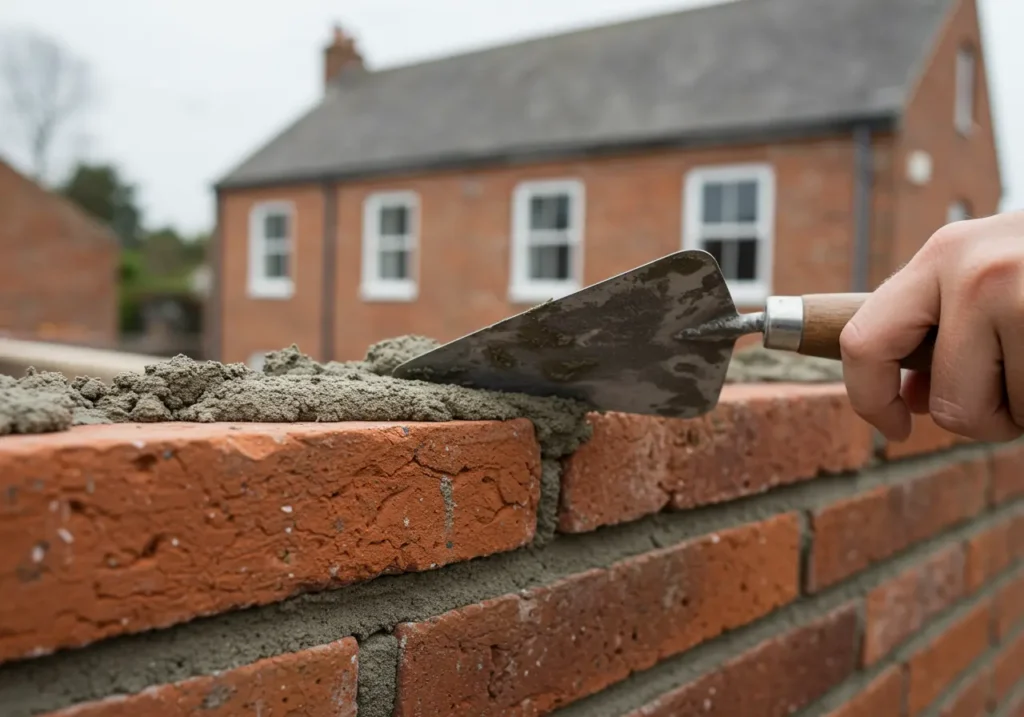
Chimney repointing NYC homeowners schedule at the right time can prevent costly masonry failure. Repointing restores the mortar joints between bricks and helps the chimney resist water entry.
What Is Chimney Repointing?
Chimney repointing is the process of removing damaged mortar from the joints between bricks and replacing it with new mortar. The goal is to restore strength, improve weather resistance, and protect the chimney from further deterioration.
Repointing is not the same as covering cracks with surface patching. Proper repointing requires removing loose or deteriorated mortar to the right depth and applying compatible new mortar.
For older brownstones and row houses, mortar compatibility matters. Mortar that is too hard can damage older brick because it does not move in the same way. A professional should choose the right mortar type for the existing masonry.
Signs Your Chimney Needs Repointing
A chimney may need repointing if mortar joints are cracked, missing, powdery, recessed, or visibly loose. Small pieces of mortar on the roof or near the chimney can also be a warning sign.
Water stains near the chimney may suggest that open joints are allowing moisture into the structure. Spalling brick, where the face of the brick flakes or breaks away, can also point to moisture problems.
If the chimney looks uneven, has gaps between bricks, or shows signs of repeated patching, a professional inspection should be scheduled.
Benefits of Professional Mortar Restoration
Professional mortar restoration strengthens the chimney and helps stop water from entering through open joints. It can also improve the chimney’s appearance by restoring clean, even lines between bricks.
Repointing can extend the life of the chimney when the bricks are still in good condition. It is often more affordable than rebuilding because it repairs the joints before the full structure becomes unstable.
It also supports roof leak prevention. When mortar joints are sealed properly and flashing is repaired at the same time, the chimney and roof connection becomes much more reliable.
Chimney Flashing Repair for NYC Roof Leak Prevention
Chimney flashing repair is one of the most important steps in preventing roof leaks. Even a solid chimney can leak if the flashing around it fails. Strong roof flashing keeps water from entering where the roof meets the chimney.
What Chimney Flashing Does
Chimney flashing is usually made of metal and installed where the chimney intersects with the roof. It creates a water-resistant transition between the masonry and the roofing material.
Flashing must direct water away from the joint. It often includes base flashing, counter flashing, step flashing, or related metal details depending on the roof type.
The chimney and roof expand, contract, and move differently. Flashing helps protect that joint while allowing the two materials to meet without leaving open gaps.
Common Flashing Failures Around Chimneys
Flashing can fail when it rusts, lifts, cracks, separates, or pulls away from the chimney. Sealant can also dry out and split. In some cases, flashing was installed incorrectly during past roof work.
Poor repairs are common around chimneys. Layers of tar or caulk may be applied as a quick fix, but these temporary patches often crack and fail again.
On flat roofs and brownstone roofs, chimney flashing must also work with the membrane, parapet walls, scuppers, drains, and roof slope. If water sits near the chimney, flashing failure becomes more likely.
How Flashing Repairs Protect the Roof System
Flashing repair protects the roof by stopping water at one of the most leak-prone areas. A properly flashed chimney helps move water away from the roof intersection and prevents moisture from entering the roof deck or interior walls.
Good flashing repair can also protect insulation, ceilings, masonry, and the roof membrane. It is especially important when a homeowner has recurring leaks near a chimney.
A professional should inspect both the flashing and the surrounding roofing materials. Replacing flashing without correcting nearby masonry or drainage issues may not solve the leak permanently.
How NYC Weather Impacts Chimneys Throughout the Year
NYC weather affects chimneys in every season. A chimney that looks fine in summer may show leaks after winter. A small crack in fall may become a larger masonry problem by spring.
Freeze-Thaw Cycles and Masonry Expansion
Freeze-thaw cycles are one of the most damaging conditions for masonry. Water enters cracks or open mortar joints. When temperatures drop, the water freezes and expands. This expansion pushes against the masonry and makes the damage worse.
As this process repeats, bricks may loosen, mortar may fall out, and small cracks may become larger. Older chimneys are more vulnerable because the mortar may already be weakened.
This is why fall inspections are valuable. Repairing open joints before winter helps reduce freeze-thaw damage.
Heavy Rain, Snow, and Ice Damage
Heavy rain can enter through cracked masonry, damaged chimney caps, failed flashing, or open joints. Snow and ice can collect around the chimney base and roofline, especially on flat roofs.
When snow melts and refreezes, ice can block drainage and push water toward weak flashing points. This may lead to leaks that appear during or after winter storms.
Repeated moisture exposure can damage both the chimney and the roof system. The longer water remains near the chimney, the higher the risk.
Wind Exposure on Tall Chimneys
Tall chimneys are exposed to strong wind, especially on row houses and brownstones. Wind can push rain into small openings and place stress on loose masonry.
If a chimney already has cracks or weak mortar, wind exposure can speed up the deterioration. Loose bricks near the top of a chimney are especially concerning because they can create safety risks.
A professional inspection can determine whether the chimney is stable and whether repairs are needed before the next storm season.
Roof Flashing and Chimney Repairs: Why They Should Be Done Together
Roof flashing and chimney flashing repair are closely connected. When a chimney leaks, the source may be the masonry, the flashing, the roof membrane, the gutters, or a combination of these issues.
Preventing Water Entry at Roof Intersections
The area where a chimney meets the roof is a natural water entry risk. Rainwater, snow melt, and ice often move toward this joint. If flashing or mortar has failed, water can enter quickly.
Repairing only the roof surface may not solve the problem if the chimney joints are open. Repairing only the masonry may not stop the leak if flashing is loose.
A combined approach gives better protection because it treats the entire roof-to-chimney connection.
Coordinating Roofing and Masonry Repairs
Coordinating roofing and masonry repairs helps the work fit together properly. The roofer can repair or roof replace flashing while the masonry team handles repointing, brick repair, cap repair, or parapet work.
This is especially useful for brownstones and row houses because roofing and masonry details often overlap. A parapet wall, chimney stack, roof drain, and membrane edge may all be connected.
When repairs are planned together, the finished work is usually cleaner, stronger, and more watertight.
Long-Term Leak Prevention Benefits
A combined repair can reduce future leaks and repeated service calls. Instead of patching one visible problem, the contractor can address the full water path.
This may include repointing mortar joints, repairing brickwork, replacing flashing, sealing roof penetrations, correcting drainage, and checking nearby gutters.
Long-term leak prevention depends on details. Chimneys, flashing, gutters, and roofing materials must all work together.
When Chimney Repair Is Enough and When Replacement Is Necessary
Some chimneys can be repaired with repointing, flashing work, cap repair, or limited brick replacement. Others may be too deteriorated and require partial or full rebuilding.
Cosmetic damage usually affects appearance more than structure. Minor surface cracks, isolated mortar gaps, or small flashing issues may be repairable when the rest of the chimney remains stable.
Structural damage is more serious. A leaning chimney, loose upper courses, major brick displacement, severe spalling, large cracks, or widespread mortar failure may require rebuilding. Safety becomes the main concern when the chimney is unstable.
Repair versus rebuilding should always be based on inspection. A professional can evaluate the chimney from the roofline upward and determine whether the structure can be safely restored.
Homeowners should avoid waiting until bricks become loose or leaks spread indoors. Early repair is usually more affordable than rebuilding a chimney after years of water damage.
Protecting Your Chimney with Routine Roof and Masonry Maintenance in NYC
Routine maintenance can extend the life of both the chimney and roof. NYC row houses and brownstones benefit from scheduled inspections because small masonry and flashing issues can become expensive if ignored.
Annual Roof and Chimney Inspections
Annual inspections help identify cracks, loose mortar, damaged flashing, chimney cap issues, roof membrane wear, gutter problems, and drainage concerns. Inspections are also helpful after heavy storms, strong winds, or winter freeze-thaw cycles.
For older homes, roof and chimney inspections should be done together. A chimney leak may look like a roof leak, and a roof leak may be connected to chimney flashing.
A documented inspection gives homeowners a clear repair plan before damage spreads.
Maintaining Gutters and Roof Drainage
Gutters and roof drainage systems help move water away from the chimney and roofline. If gutters are clogged or roof drains are blocked, water may collect near chimney flashing or masonry.
Flat roofs need special attention because ponding water can sit near chimney bases and parapet walls. This increases moisture exposure and leak risk.
Regular cleaning helps prevent water backup. It also reduces stress on flashing, masonry, roof edges, and siding.
Preventive Maintenance That Extends Chimney Life
Preventive maintenance may include repointing small mortar gaps, sealing minor cracks with appropriate materials, repairing flashing, replacing damaged chimney caps, clearing debris, and correcting drainage issues.
The goal is to stop water before it enters. Once water gets inside masonry, repairs become more complicated.
A well-maintained chimney protects the home, supports the roof system, and helps preserve the character of NYC brownstones and row houses.
Conclusion: Protect Your NYC Home with Professional Chimney Repair and Flashing Services
Early chimney repairs prevent costly structural damage. When cracked mortar, loose brickwork, or damaged flashing is handled quickly, the chimney remains stronger and the roof is better protected from leaks.
Proper chimney repointing strengthens aging masonry and helps restore weather resistance. Flashing repairs stop roof leaks before they spread into ceilings, walls, insulation, and roof decking. Routine inspections extend the life of both the chimney and roofing system.
For NYC row houses and brownstones, combining roofing and masonry services provides better long-term protection. Chimneys, roof flashing, gutters, drainage, masonry, and roof membranes all work together, so they should be inspected together.
Schedule your professional chimney inspection today. Goldenberg Roofing NYC provides chimney repair NYC services, brownstone chimney repair, chimney repointing, roof flashing repair, roof inspections, roof repair, flat roofing, gutter work, siding, and masonry services throughout NYC. Whether your home needs chimney repair, repointing, flashing replacement, or a complete roof inspection, call Goldenberg Roofing NYC today at (212) 457-1324 for a customized repair solution, or visit us at 1274 5th Ave, New York, NY 10029.
FAQs: Chimney Repair, Repointing & Flashing in NYC
How do I know if my chimney needs repair in NYC?
Your chimney may need repair if you notice cracked bricks, crumbling mortar, leaning sections, water stains near the chimney, loose flashing, missing chimney caps, interior leaks, or pieces of mortar on the roof. Older NYC row houses and brownstones should have chimney and roof inspections scheduled regularly to catch problems early.
What is chimney repointing, and when is it necessary?
Chimney repointing is the process of removing damaged mortar from between bricks and replacing it with new compatible mortar. It is necessary when mortar joints become cracked, loose, recessed, powdery, or missing. Repointing helps strengthen the chimney and reduce water penetration before major masonry damage occurs.
How long does chimney flashing repair typically last?
Chimney flashing repair can last for many years when quality materials are used and the repair is installed correctly. Its lifespan depends on roof condition, flashing material, weather exposure, maintenance, and whether the surrounding masonry is also repaired. Damaged mortar or poor drainage can shorten the life of flashing repairs.
Can damaged chimney flashing cause roof leaks?
Yes, damaged chimney flashing is one of the most common causes of roof leaks. Flashing protects the joint where the chimney meets the roof. If it cracks, lifts, rusts, separates, or was installed poorly, rain and snow melt can enter the roof system and cause ceiling stains, insulation damage, and interior leaks.
How often should NYC homeowners schedule chimney inspections?
NYC homeowners should schedule chimney inspections at least once a year and after major storms, heavy snow, or visible roof leaks. Older brownstones and row houses may need more frequent inspections because aging masonry, flashing, drainage, and roofline details can deteriorate faster under city weather conditions.
Is chimney repair more affordable than rebuilding a chimney?
Chimney repair is usually more affordable than rebuilding when damage is caught early. Repointing, flashing repair, minor brick replacement, and cap repair can often restore performance. Rebuilding becomes necessary when the chimney is leaning, unstable, severely cracked, or structurally deteriorated.
Why are chimney and roof inspections recommended together for older NYC homes?
Chimney and roof inspections are recommended together because many leaks begin where the chimney meets the roof. Damaged flashing, open mortar joints, poor drainage, cracked masonry, and roof membrane wear can all work together to cause water intrusion. A combined inspection helps identify the full source of the problem.