Quick Answer : Flat roofs in Manhattan need regular maintenance because standing water, rooftop equipment, service traffic, snow, ice, heat, and older building conditions can create hidden damage before leaks appear. Routine inspections, drain cleaning, flashing checks, and early repairs help property owners prevent expensive roof and interior damage.
Manhattan has thousands of flat and low-slope roofs across brownstones, prewar co-ops, townhouses, apartment buildings, mixed-use properties, office buildings, retail spaces, restaurants, and commercial facilities. These roofs are not simple surfaces. They often work as drainage areas, equipment platforms, service access zones, and weather barriers all at once.
Many property owners do not realize how much stress a flat roof handles every day. A Manhattan roof may support HVAC units, cooling towers, vents, skylights, roof hatches, solar panels, drains, scuppers, parapet walls, and regular service traffic. At the same time, it must handle heavy rain, snow, ice, summer heat, freeze-thaw movement, and dense urban exposure.
This guide explains why Manhattan flat roofs need consistent care, how drainage problems cause early deterioration, why rooftop equipment requires roofing attention, what a maintenance plan should include, and when repair or replacement becomes the better option.
Why Manhattan Buildings Place More Stress on Flat Roofs
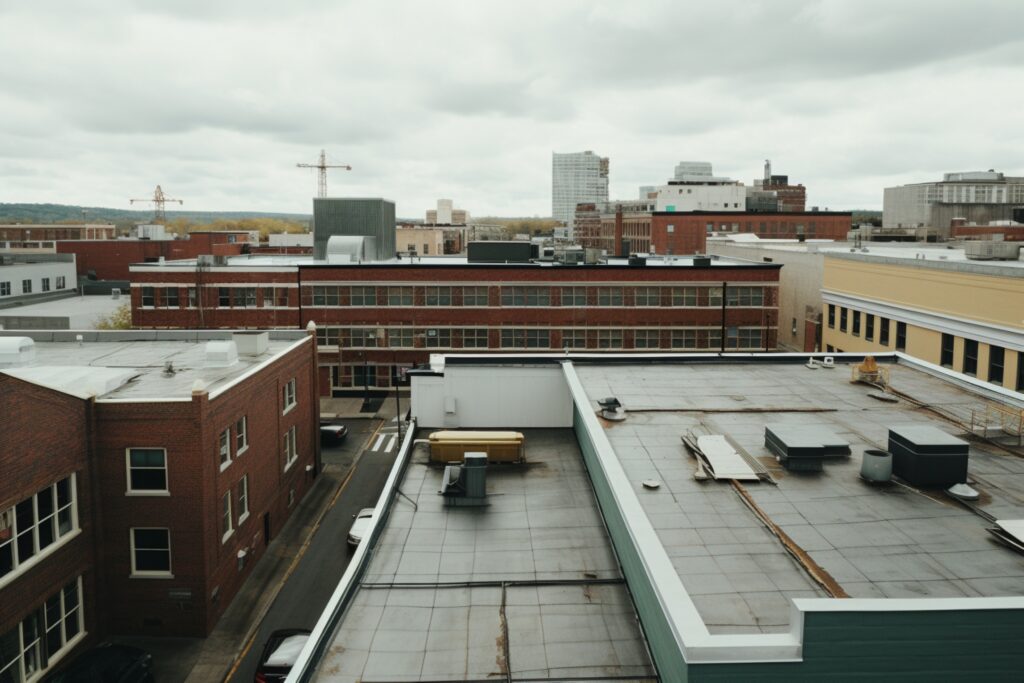
Flat roofs in Manhattan face daily pressure because the buildings are tightly packed, heavily used, and exposed to year-round weather. A roof in the city rarely sits untouched. It often carries equipment, handles drainage, provides service access, and protects the building below.
Dense Urban Construction Creates Roofing Challenges
Manhattan buildings are closely packed in neighborhoods like Midtown, Chelsea, SoHo, Tribeca, the Upper West Side, Harlem, and the Financial District. This dense construction can limit airflow around roof surfaces and keep heat trapped between buildings.
Flat roofs also absorb reflected heat from nearby masonry, glass, pavement, and rooftop equipment. During summer, this heat can speed up membrane aging, dry out sealants, and weaken older coatings. In winter, the same roof may face snow, ice, and freezing water around drains or scuppers.
Older Manhattan buildings add another challenge. Many prewar co-ops, brownstones, walk-ups, and mixed-use properties have masonry parapets, old roof decks, outdated drainage layouts, skylights, chimneys, and multiple layers of past repairs. A professional roof inspection in Manhattan can identify these conditions before they become active leaks.
Rooftop Equipment Increases Daily Wear
Manhattan roofs often carry more equipment than property owners expect. Commercial buildings, restaurants, apartment buildings, and mixed-use properties may have HVAC systems, exhaust fans, cooling towers, ducts, pipes, conduits, telecom equipment, and solar panels.
Every piece of rooftop equipment creates stress points. Vibrations can affect flashing. Service technicians can puncture membranes. Pipe supports can shift. Walk paths can wear down. Sealants around equipment curbs can crack from heat and movement.
That is why Manhattan flat roofing services should include rooftop equipment areas in every maintenance plan. A roof inspection that ignores HVAC curbs, exhaust penetrations, and service paths can miss some of the most common leak sources.
Seasonal Weather Makes Small Roof Problems Worse
Manhattan weather changes sharply throughout the year. Summer heat expands roofing materials. Winter cold contracts them. Snow and ice can block drains. Heavy rain can expose weak seams, flashing gaps, and drainage problems.
Freeze-thaw cycles are especially damaging. Water enters a small opening, freezes, expands, and makes the opening larger. This can affect membrane seams, flashing edges, roof coatings, masonry joints, and parapet walls.
Because many Manhattan roofs are flat or low-slope, water does not move away as quickly as it does on a pitched roof. Regular cleaning, inspection, and repair help reduce that risk.
How Drainage Problems Damage Manhattan Flat Roofs
Drainage maintenance is one of the most important parts of flat roof care. Even a strong membrane can fail early if water sits on the roof after every storm.
Ponding Water After Heavy Rain
Ponding water means water remains on the roof after rain or snow melt instead of draining away properly. It often forms around low spots, clogged drains, scuppers, roof edges, skylights, rooftop equipment, and sagging roof areas.
Standing water can weaken membranes, stress seams, soften insulation, and increase the chance of leaks. It can also add weight to the roof structure, especially when water is deep or widespread.
Manhattan roofs with parapet walls need special attention because water can become trapped if drains or scuppers do not work properly. If the roof perimeter traps water, the drainage system must be checked carefully before storm season.
Blocked Roof Drains and Internal Drainage Systems
Many Manhattan buildings use internal roof drains. These drains move water from the roof into the building’s drainage system. They can work well, but they need regular cleaning.
Leaves, trash, roof granules, construction dust, bird debris, loose sealant, and rooftop maintenance materials can all block drains. In Manhattan, construction dust and windblown debris are common because roofs are often surrounded by active buildings and busy streets.
When drains back up, water may collect around roof penetrations, parapets, skylights, and equipment curbs. This increases leak risk and shortens the life of the roof system.
Winter Ice Around Drains and Scuppers
Winter creates another drainage problem. Snow may melt during the day and refreeze at night. Ice can form around drains, scuppers, gutters, and downspouts.
Once ice blocks a drain, melting snow has nowhere to go. Water may move under loose seams, around flashing, or into roof-edge gaps. This can lead to interior leaks even when the main roof surface appears intact.
Before winter, property owners should schedule drain cleaning, scupper inspection, roof-edge checks, and a review of any areas where water has ponded before.
Why Rooftop Equipment Needs Roofing Attention on Manhattan Flat Roofs
Rooftop equipment maintenance is a major part of commercial flat roof care in Manhattan. Many commercial and mixed-use roofs carry equipment that is serviced throughout the year.
HVAC Service Traffic Can Damage Membranes
HVAC technicians, electricians, maintenance crews, telecom workers, and building staff often access Manhattan roofs. Each visit can wear down the membrane if there are no walk pads or marked service paths.
Foot traffic can cause punctures, scuffs, seam damage, coating wear, and compression around insulation. Tools, ladders, panels, and equipment parts can also damage the roof surface.
A commercial flat roof maintenance plan should include dedicated walk paths, equipment-zone inspections, and roof checks after major HVAC or mechanical work.
Equipment Installations Create Leak-Prone Areas
Equipment installations often require pipes, conduits, exhaust lines, supports, drains, and fasteners. Each penetration must be sealed and flashed correctly.
Leaks commonly form around HVAC curbs, exhaust fans, pipe boots, electrical conduits, skylights, roof hatches, and support stands. These areas move differently than the surrounding roof surface, which makes them vulnerable during heat, cold, and vibration.
Flashing around roof openings and penetrations should be checked regularly. Even a small flashing gap can send water into the roof assembly during wind-driven rain.
Equipment Inspections Should Include Roof Checks
Equipment inspections should include the roof around the equipment, not only the unit itself. A technician may confirm the HVAC unit works, but the roof curb, flashing, sealant, and membrane around that unit may still be failing.
A joint inspection helps identify cracked sealant, loose flashing, punctures, open seams, standing water, and vibration-related damage. It also helps prevent a common problem where mechanical service creates roof damage that is not noticed until the next storm.
For Manhattan commercial buildings, this coordination is important because one equipment-area leak can affect offices, tenants, restaurants, retail inventory, or electrical systems below.
Why Preventive Roof Maintenance Saves Money for Manhattan Buildings
Preventive maintenance helps property owners avoid emergency repairs, interior restoration, tenant complaints, business disruption, and early roof replacement.
Small Problems Are Easier to Fix Early
Small roof problems rarely stay small on a Manhattan flat roof. A tiny puncture can spread into wet insulation. A loose flashing edge can become an interior leak. A clogged drain can create ponding water across a large roof area.
Preventive inspections can identify minor cracks, seam openings, punctures, flashing separation, soft roof areas, and early membrane wear before water spreads.
A planned repair is usually easier and less expensive than an emergency repair during active rain. It also gives property owners more control over timing, budget, and tenant communication.
Maintenance Extends the Life of Flat Roofing Systems
Regular inspections, cleaning, and protective maintenance can extend the service life of EPDM, TPO, SBS, modified bitumen, built-up roofing, and other flat roofing systems.
Maintenance helps preserve the parts that usually fail first. These include seams, drains, scuppers, roof edges, skylights, HVAC curbs, parapets, and flashing. When these areas are cared for, the roof performs better as a complete system.
A neglected roof may need replacement years earlier than expected. A maintained roof gives owners more time to plan for future roof replacement in Manhattan instead of reacting to sudden failure.
Preventive Care Reduces Emergency Repair Costs
Emergency roof repair often costs more because damage has already spread. Water may enter ceilings, insulation, drywall, electrical areas, tenant spaces, or commercial inventory before the problem is discovered.
Preventive maintenance reduces that risk. It also helps avoid business interruption in commercial properties, restaurants, offices, medical spaces, and retail buildings.
If a leak is already active, property owners should schedule emergency roof repair before the damage spreads through the building.
Common Flat Roof Problems on Manhattan Buildings
Flat roof problems in Manhattan often appear in patterns. Many are tied to drainage, age, rooftop equipment, flashing, and old repair work.
Membrane Cracks and Surface Blistering
Membrane cracks may form from age, UV exposure, temperature movement, and repeated ponding water. Blisters can appear when moisture or air becomes trapped under the roof surface.
These signs should not be ignored. Cracks can allow water to enter, while blisters may indicate deeper moisture problems. If damaged areas are widespread, the roof may need more than a surface patch.
Flashing Separation Around Roof Edges
Flashing separation is common around parapet walls, skylights, chimneys, vents, roof hatches, and equipment curbs. Once flashing pulls away, water can enter behind the membrane.
On Manhattan buildings, roof edges are especially important because parapets, coping stones, and masonry walls are common. A leak may look like a roof membrane problem but actually begin at wall flashing or a parapet detail.
Moisture Beneath Roofing Layers
Many older Manhattan roofs have multiple repair layers. If water gets trapped beneath the surface, it may not be visible right away.
Warning signs include soft spots, bubbling, recurring leaks, musty odors, stains, or roof areas that feel spongy underfoot. Trapped moisture can reduce insulation performance and damage the roof deck.
When moisture is widespread, replacement may be more practical than another repair.
Early Leak Warning Signs
Property owners often wait until water drips indoors. That is risky. Early warning signs may include ceiling stains, peeling paint, damp plaster, bubbling drywall, mold odors, slow drains, ponding water, loose flashing, cracked sealants, or repeated roof patches.
These signs should trigger a professional inspection. In Manhattan buildings with tenants or businesses, waiting can increase repair costs and disruption.
Creating an Effective Flat Roof Maintenance Program in Manhattan
A maintenance program helps Manhattan property owners stay ahead of problems. It should be scheduled, documented, and tailored to the building.
Recommended Inspection Schedule
Most Manhattan flat roofs should be inspected at least twice a year, usually in spring and fall. Spring inspections identify winter damage. Fall inspections prepare the roof for snow, ice, and freezing drainage conditions.
Summer inspections may be useful for roofs with heavy heat exposure, rooftop equipment, or frequent service traffic. Winter checks may be needed after heavy snow, ice formation, or active leaks.
Commercial buildings, restaurants, high-use rooftops, older properties, co-ops, and condos may need more frequent inspections because equipment traffic and drainage stress are higher.
Routine Cleaning and Drainage Maintenance
Routine cleaning should include drain cleaning, scupper clearing, gutter inspection, debris removal, and roof surface review.
The maintenance team should remove leaves, trash, loose fasteners, rooftop debris, construction dust, and materials left behind by service crews. Drains should be visually checked to confirm water can move freely.
A clean drainage system is one of the simplest ways to prevent ponding water and reduce leak risk.
Maintenance Documentation and Long-Term Planning
Every maintenance visit should be documented. Reports should include photos, repair notes, roof condition, drainage status, membrane condition, flashing concerns, equipment-area issues, and recommendations.
Documentation helps owners plan budgets and compare roof condition over time. It also supports better decisions about when repair is enough and when replacement should be planned.
For co-ops, condos, commercial buildings, and property managers, documentation is especially valuable because it creates a clear maintenance history.
| Maintenance Task | Why It Matters | Recommended Timing |
| Drain and scupper cleaning | Prevents ponding water and backups | Spring, fall, and after storms |
| Flashing inspection | Finds common leak sources early | Twice a year |
| Rooftop equipment review | Checks curbs, penetrations, and service traffic damage | After HVAC work and during inspections |
| Membrane inspection | Finds cracks, punctures, blisters, and seam issues | Twice a year |
| Interior leak check | Confirms hidden water intrusion signs | After major rain or snow melt |
| Documentation | Supports budgeting and long-term planning | Every maintenance visit |
When Maintenance Is No Longer Enough for Manhattan Flat Roofs
Maintenance can extend roof life, but it cannot save every roof. Some systems reach a point where replacement becomes the better investment.
Maintenance may no longer be enough when the roof has extensive water intrusion, wet insulation, soft decking, widespread membrane failure, repeated leaks, severe ponding water, or multiple failed repair areas.
Aging roofing systems also need careful evaluation. If the roof has old patchwork, brittle membrane surfaces, separated seams, failing flashing, and repeated drainage problems, another maintenance visit may only delay the larger issue.
NYC rules may also matter when repair work affects the roof deck or sheathing. If hidden moisture, structural deterioration, or major replacement work may be involved, a professional evaluation is important before work begins.
The goal is to avoid spending money on temporary repairs when the roof needs a more complete solution.
Conclusion: Protect Your Manhattan Flat Roof Before Small Problems Become Major Expenses
Manhattan buildings experience unique roofing challenges because of dense construction, flat roof drainage demands, heavy rooftop equipment, older building materials, and year-round weather exposure. A flat roof in Manhattan is not a passive surface. It is a working system that protects tenants, interiors, equipment, and property value.
Preventive roof maintenance helps extend the life of commercial flat roofing systems. Regular inspections detect hidden issues before they become expensive repairs. Drainage maintenance and rooftop equipment checks also reduce leak risks and improve long-term performance.
A structured maintenance program helps property owners plan ahead. Instead of reacting to emergency leaks, owners can schedule repairs, budget for future work, and protect the building year-round.
Schedule Your Professional Flat Roof Maintenance Inspection Today. Protect your Manhattan property’s roof before minor issues become costly repairs. Goldenberg Roofing NYC provides comprehensive flat roof inspections, preventive maintenance plans, drainage evaluations, rooftop equipment-area checks, commercial flat roof maintenance, roof repair, roof replacement, emergency roof repair, gutters, masonry, siding, skylight services, TPO roofing, EPDM roofing, and SBS flat roofing solutions designed for Manhattan buildings.
Call Goldenberg Roofing NYC today at (212) 457-1324 to schedule your roof assessment, or visit us at 1274 5th Ave, New York, NY 10029. Goldenberg Roofing NYC serves Manhattan property owners with Manhattan roofing services, flat roofing, roof repair, roof replacement, inspections, and emergency roofing support.
FAQs: Flat Roof Maintenance Manhattan
Why is flat roof maintenance more important for Manhattan buildings?
Flat roof maintenance is important for Manhattan buildings because many roofs have limited slope, rooftop equipment, parapet walls, internal drains, aging materials, and frequent exposure to snow, ice, rain, heat, and service traffic. Regular maintenance helps prevent leaks, ponding water, membrane damage, and costly emergency repairs.
How often should commercial flat roofs in Manhattan be inspected?
Commercial flat roofs in Manhattan should usually be inspected at least twice a year, often in spring and fall, and after major storms, heavy snow, rooftop equipment work, or recurring leaks. Buildings with heavy HVAC traffic, restaurants, older roof systems, or drainage problems may need more frequent inspections.
What causes ponding water on Manhattan flat roofs?
Ponding water is often caused by clogged drains, blocked scuppers, poor roof slope, compressed insulation, roof settlement, debris buildup, old repair layers, or frozen drainage points. Ponding water should be corrected because it can weaken membranes, stress seams, and increase leak risk.
How does rooftop HVAC equipment affect flat roof performance?
Rooftop HVAC equipment affects flat roof performance by creating penetrations, flashing points, vibration, service traffic, and equipment curb details that can become leak sources. Technicians walking on the roof can also puncture or wear down membranes if walk paths and protective pads are not used.
What is included in a commercial flat roof maintenance program?
A commercial flat roof maintenance program usually includes roof inspections, drain cleaning, scupper clearing, debris removal, flashing checks, membrane inspections, rooftop equipment-area reviews, puncture repairs, sealant monitoring, photo documentation, and long-term repair or replacement planning.
Can preventive roof maintenance help avoid expensive roof replacement?
Preventive roof maintenance can help delay expensive roof replacement by catching small issues early, keeping drains clear, repairing flashing, protecting seams, and reducing water intrusion. However, replacement may still be needed when the roof has wet insulation, soft decking, severe ponding, widespread membrane failure, or repeated leaks.
What are the early warning signs that a flat roof needs professional maintenance?
Early warning signs include ponding water, slow drains, ceiling stains, damp plaster, bubbling paint, membrane cracks, surface blisters, loose flashing, damaged sealants, soft roof areas, musty odors, and leaks after heavy rain or snow melt. These signs should be inspected before the damage spreads.