
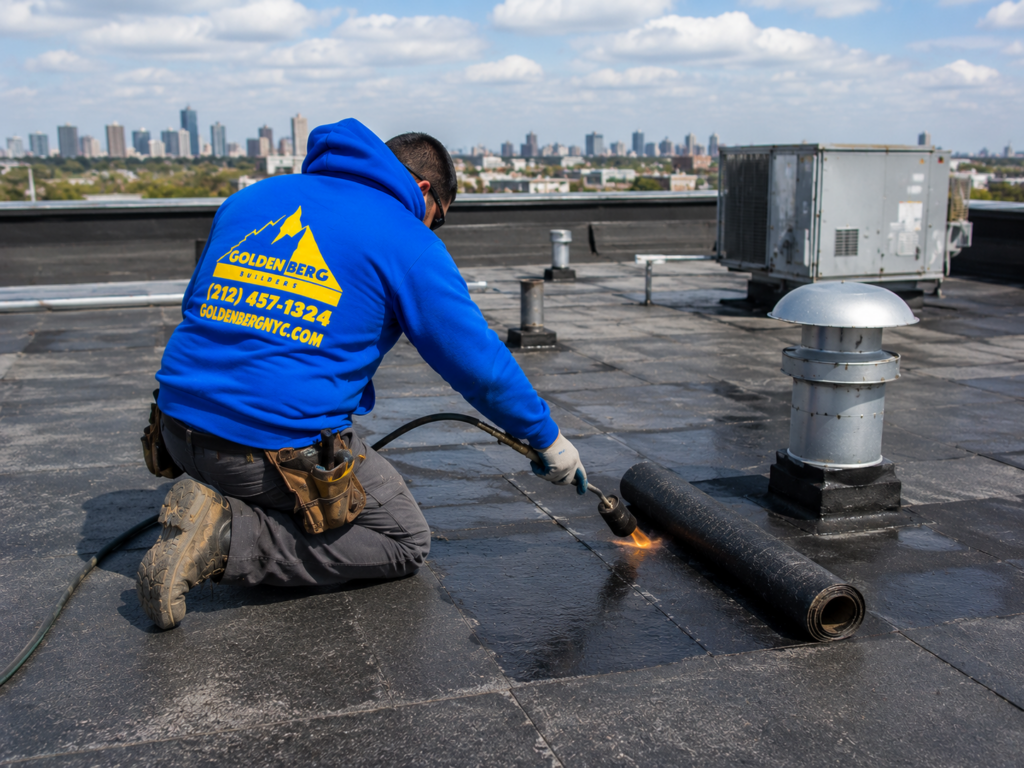
Quick Answer : Homeowners can safely handle basic roof maintenance such as checking for visible damage, cleaning gutters, and watching for interior leak signs. However, major roof repairs, structural issues, flashing work, and leak tracing should be handled by a professional roofer to avoid injury or costly mistakes.
Responsible DIY roof repair can help homeowners catch small roofing issues before they become expensive problems. However, roof care should always be handled with safety and good judgment. Some tasks can be managed by a careful homeowner, while larger repairs should be left to trained roofing professionals.
In NYC, homeowner roof care is especially important because roofs face heavy rain, snow, wind, summer heat, ice, and constant urban debris. A small leak, clogged gutter, loose shingle, or cracked flashing area can quickly create ceiling stains, mold growth, insulation damage, and structural concerns if ignored.
Routine inspections and maintenance can extend the life of your roof and protect your property value. Still, DIY work has limits. Homeowners should focus on safe visual inspections, light cleaning, basic maintenance, and early warning signs. This guide explains what you can inspect, what small repairs may be safe, how to prevent roof leaks, and when it is time to call a professional roofer in NYC.
Why DIY Roof Repair and Maintenance Matter for NYC Homeowners
DIY roof repair and homeowner roof care matter because most roof problems do not start as major failures. They often begin as small cracks, loose materials, clogged gutters, or early water stains. When these issues are noticed early, they can often be corrected before a full roof replacement becomes necessary.
Unique Roofing Challenges Faced by NYC Homes
NYC homes deal with weather from every direction. Heavy rain can expose weak flashing and clogged drainage. Snow can sit on roofs and add extra weight. Wind can lift shingles, move debris, and loosen roof edges. Summer heat can also dry out roofing materials and weaken sealants over time.
Urban conditions add more stress. Rooftops can collect dirt, leaves, plastic, construction dust, and pollution. Nearby buildings may block sunlight, trap moisture, or change how wind moves across the roof surface. As a result, a roof can age unevenly.
Older homes, brownstones, townhouses, and multi-family buildings may also have aging roof decks, old flashing, skylights, masonry joints, and drainage systems that need regular attention. Because of these challenges, routine inspection is not optional. It is part of protecting the home.
Benefits of Routine Roof Maintenance
Routine roof maintenance helps prevent expensive repairs by catching early problems. A missing shingle, clogged gutter, or cracked seal may not look serious at first, but water can use those small openings to enter the home.
Maintenance also improves roof longevity. When debris is removed, gutters are cleared, flashing is checked, and small issues are repaired early, the roof can perform better through seasonal weather.
A well-maintained roof also supports property value. Buyers, tenants, and insurance providers may all pay attention to the condition of the roof. A neglected roof can create doubt, while a cared-for roof shows that the home has been protected.
Knowing the Limits of DIY Roofing
Homeowners can safely handle some roof care tasks, especially from the ground or from a stable ladder when conditions are dry and safe. Visual inspections, gutter cleaning, debris removal, checking interior stains, and documenting damage are good homeowner tasks.
However, roof work becomes dangerous when height, steep slopes, ice, wet surfaces, structural damage, electrical hazards, skylights, or major leaks are involved. OSHA’s roofing safety materials place strong attention on fall protection because roofing work can be dangerous when proper safety systems are not used.
If a repair requires walking across a high roof, opening the roofing system, repairing structural damage, working near roof edges, or handling major storm damage, a professional roofer should be contacted.
NYC Roof Inspection Checklist Every Homeowner Should Follow
A practical roof inspection checklist helps homeowners inspect the roof in a consistent way. The goal is not to replace a professional inspection. Instead, the goal is to identify warning signs early so repairs can be scheduled before damage spreads.
Exterior Roof Inspection
Start with a ground-level visual inspection whenever possible. Look for missing, cracked, curled, or loose shingles. If the roof is visible from a nearby window, yard, sidewalk, or safe upper-level area, check whether the roof surface looks uneven or worn.
Flashing should also be checked. Flashing is often installed around chimneys, skylights, vents, walls, and roof transitions. If flashing looks loose, rusted, lifted, cracked, or separated, water may be able to enter.
Chimneys and skylights deserve extra attention. Cracked masonry, deteriorated sealant, loose flashing, or water stains near these areas can point to a leak source. Roof penetrations such as vents, pipes, and exhaust openings should also be inspected for damaged seals.
Interior Inspection Checklist
Interior inspection is just as important as exterior inspection. In many homes, roof damage is first noticed inside. Look for ceiling stains, brown rings, peeling paint, bubbling drywall, damp walls, or musty odors.
Mold or mildew may appear when moisture remains hidden. If you notice a persistent smell after rain, the roof, attic, insulation, or wall cavity may need professional inspection.
Attic moisture is another warning sign. Damp insulation, dark wood stains, rusted nails, or condensation can suggest poor ventilation or water intrusion. Poor ventilation can also shorten roof life because trapped heat and moisture may affect the underside of the roof deck.
Inspecting Gutters and Drainage Systems
Gutters and drainage systems help move water away from the roof and home. If gutters are clogged, sagging, or overflowing, water can back up under roofing materials or spill against siding and masonry.
Check downspouts during or after rain when it is safe to do so. Water should move freely away from the home. If the water is spilling over gutter edges, pooling near the foundation, or backing up near the roofline, drainage maintenance is needed.
Proper drainage is especially important in NYC because heavy rain, snow melt, and urban debris can overwhelm weak systems. Clogged gutters may seem minor, but they can contribute to leaks, ice issues, and roof edge damage.
| Inspection Area | What Homeowners Should Look For | Why It Matters |
| Roof surface | Missing shingles, cracks, uneven areas, debris | Helps identify early exterior damage |
| Flashing | Loose, rusted, lifted, or cracked sections | Many leaks begin around roof transitions |
| Interior ceilings | Stains, bubbling paint, damp spots | Shows possible active or past leaks |
| Attic area | Moisture, mold, poor ventilation | Helps catch hidden water or airflow issues |
| Gutters | Clogs, overflow, sagging, leaks | Protects drainage and roof edges |
| Downspouts | Slow flow or water pooling near the home | Helps prevent water backup and foundation issues |
DIY Roof Repair Tasks That Are Safe for NYC Homeowners
Some DIY roof repair tasks may be safe for homeowners when the roof is easy to access, the surface is dry, the work is minor, and proper safety precautions are followed. However, no repair is worth the risk of a fall or serious injury.
Replacing Damaged Shingles
Replacing one or two damaged shingles may be possible for experienced homeowners on low, safely accessible roofs. The basic process includes identifying the damaged shingle, gently lifting the surrounding shingles, removing fasteners, sliding out the damaged piece, placing the replacement shingle, securing it, and sealing the area as needed.
The required tools may include a flat pry bar, roofing nails, a hammer, roofing sealant, gloves, and matching shingles. However, matching shingles can be difficult on older roofs, and poor installation can create new leaks.
Safety should come first. Do not attempt shingle repair on a steep roof, wet roof, icy roof, high roof, or roof with visible sagging. In NYC, many homes have roof access challenges, so professional repair is often the safer option.
Sealing Small Roof Leaks
Small roof leaks may sometimes be managed with temporary sealants until a professional repair can be scheduled. This is especially useful when rain is expected and the leak source is easy to identify.
However, temporary sealing should not be treated as a permanent solution. Roof leaks often come from flashing, roof penetrations, membrane seams, skylight edges, or hidden water paths. A small visible crack may not be the true source.
Homeowners may seal minor cracks around accessible areas, but major flashing repairs, flat roof membrane repairs, and leaks near chimneys or skylights should be handled by professionals. Poor sealing can trap moisture and make the problem worse.
Cleaning Gutters and Roof Debris
Cleaning gutters is one of the most useful homeowner maintenance tasks. Leaves, dirt, twigs, and roof granules can block water flow. When gutters clog, water may overflow and damage the roof edge, siding, masonry, or foundation area.
Roof debris should also be removed when it is safe to do so. Leaves and branches can hold moisture against roofing materials. On flat roofs, debris can block drains and create ponding water.
For safety, gutter cleaning should be done with a stable ladder, gloves, and careful positioning. If the home is tall, the ground is uneven, or the gutters are difficult to reach, professional gutter cleaning is the better choice.
Roof Maintenance Tips to Prevent Costly Repairs in NYC
Strong roof maintenance tips can help NYC homeowners avoid expensive roof problems. A roof does not need attention only after a leak appears. Preventive care throughout the year gives the roof a better chance of handling storms, snow, heat, and daily wear.
Seasonal Roof Maintenance Schedule
A seasonal maintenance schedule keeps roof care organized. In spring, inspect for winter damage, loose shingles, damaged flashing, clogged gutters, and interior stains. Snow, ice, and wind may have created problems that were not visible during colder months.
In summer, check sealants, ventilation, skylights, and signs of heat-related wear. High temperatures can dry out materials and expose weak areas. This is also a good time to schedule professional repairs before fall storms arrive.
In fall, remove leaves, clean gutters, clear drains, and prepare the roof for winter. In winter, monitor for ice buildup, ceiling stains, and drainage issues after snow melt. Homeowners should not climb on icy roofs, but they can observe warning signs from safe areas.
Trim Trees and Remove Debris
Tree branches should be kept away from the roof when possible. Overhanging branches can scrape shingles, drop leaves into gutters, and create impact damage during storms.
Debris can also support moss or algae growth by holding moisture against the roof surface. While moss is more common in shaded areas, any moisture-holding material can speed up wear.
Better airflow helps the roof dry after rain. When branches are trimmed and debris is removed, the roof surface can dry more evenly, which reduces long-term moisture stress.
Protect Roofing Components
Roofing components work together. Flashing, vent pipes, skylights, sealants, chimneys, and roof edges all need attention. If one component fails, water may enter even when the main roof surface is still in good condition.
Sealants should be checked for cracks or gaps. Vent pipe boots should be inspected for deterioration. Skylight flashing should be watched closely because leaks often appear around skylight edges.
Protecting these smaller components can prevent major water damage. In many cases, a simple repair at the right time can avoid a costly interior restoration later.
Roof Leak Prevention Strategies for NYC Homes
Roof leak prevention is easier and less expensive than repairing major water damage. The best approach is to combine regular inspection, drainage care, prompt repairs, and professional help when a problem is beyond basic maintenance.
Common Causes of Roof Leaks
Damaged shingles are a common cause of leaks on sloped roofs. When shingles crack, curl, loosen, or go missing, the layers beneath become more exposed to water.
Failed flashing is another major cause. Flashing protects areas where the roof meets walls, chimneys, skylights, vents, and other transitions. If flashing fails, water can enter even if the roofing material looks fine.
Ice dams, aging materials, clogged gutters, and poor ventilation can also lead to leaks. In NYC, freeze-thaw cycles can make small cracks worse, while clogged drainage can push water into vulnerable areas.
Early Warning Signs of Water Intrusion
Ceiling discoloration is one of the most common signs of water intrusion. A small stain may suggest a slow leak, while bubbling paint or active dripping may point to a more urgent issue.
Damp insulation can also signal roof trouble. Wet insulation loses performance and may hold moisture for a long time. Mold growth, musty odors, and dark stains on wood may also suggest that water is entering.
Homeowners should document these signs with photos and dates. This helps a roofing professional understand when the issue started and how it has changed over time.
Preventative Measures That Work
Regular inspections are the foundation of leak prevention. A homeowner inspection can catch visible issues, while a professional inspection can identify hidden problems.
Prompt repairs also matter. A missing shingle, small flashing gap, cracked seal, or clogged drain should not be ignored. Water damage usually becomes more expensive the longer it is left untreated.
Proper attic ventilation and routine gutter maintenance also help. Ventilation reduces trapped moisture, while clean gutters allow water to move away from the roofline. Together, these steps reduce the risk of leaks throughout the year.
When DIY Roof Repair Is No Longer Enough in NYC
DIY roof repair has a place, but it should never be pushed too far. When the roof shows structural damage, major leaks, storm impact, or widespread deterioration, professional roofing services become necessary.
Structural Roofing Damage
Sagging roof areas, soft decking, large leaks, and extensive water damage should always be handled by professionals. These signs may mean that the roof system has been weakened below the surface.
A sagging roof deck is especially serious. It may indicate trapped moisture, rotted wood, heavy roof layers, or structural stress. Walking on that area can be unsafe.
Large leaks also need professional attention because the visible water may only be part of the problem. Moisture may have already reached insulation, decking, walls, or electrical areas.
Storm Damage and Emergency Situations
Storm damage can create immediate roofing risks. Fallen branches, wind uplift, hail damage, punctures, and torn flashing can all allow water into the home quickly.
Emergency roof repair may be needed when water is actively entering the property. In these situations, homeowners should focus on protecting the interior safely, placing containers under drips, moving valuables, documenting damage, and calling a professional roofer.
Climbing onto a damaged roof after a storm is risky. Wet surfaces, loose materials, hidden openings, and unstable areas can create serious hazards.
Signs You May Need Roof Replacement
Repeated repairs can be a sign that roof replacement should be considered. If the same roof continues to leak in different areas, small repairs may no longer provide good long-term value.
Roof age is also important. Older roofs with widespread deterioration, brittle shingles, failing membranes, recurring leaks, or major flashing problems may need replacement instead of another patch.
A professional inspection can help determine whether repair or replacement is the smarter investment. This is especially important in NYC, where some roofing work may involve permits, code requirements, or building approvals. NYC DOB notes that most construction work in the city requires approval and permits, although some minor alterations may not.
Roofing Systems That Require Professional Maintenance in NYC
Some roofing systems need professional maintenance because they involve specialized materials, drainage details, safety requirements, or building-specific concerns. Homeowners can still observe warning signs, but repairs should often be completed by trained roofers.
Flat Roofing Systems
Flat roofing systems are common across NYC. EPDM and TPO roofing systems can perform well, but they require proper drainage, seam integrity, flashing care, and regular inspections.
EPDM maintenance may involve checking for punctures, seam separation, shrinkage, and flashing issues. TPO maintenance may include checking heat-welded seams, membrane wear, and drainage flow.
Flat roofs are especially sensitive to ponding water. If drains clog or slope is poor, water can remain on the roof and weaken the system over time.
Asphalt Shingle Roofing
Asphalt shingle roofing needs routine inspection for missing shingles, cracked shingles, curling edges, granule loss, and flashing damage. Many small shingle issues can be repaired if caught early.
However, widespread deterioration often points to roof aging. If many shingles are brittle, loose, or worn, professional evaluation is needed.
A roofer can also check whether the roof has ventilation problems, poor installation details, or hidden deck damage beneath the shingles.
Specialized Roofing Features
Specialized features need extra care. Skylight installation areas should be inspected for flashing condition, seal failure, condensation, and surrounding roof wear.
Chimneys and masonry connections should also be checked. Cracked mortar, loose flashing, and deteriorated masonry can allow water to enter near the roofline.
Roof ventilation systems are another important part of homeowner roof care. Poor ventilation can trap heat and moisture, which may shorten roof life and increase the risk of interior condensation.
Conclusion: Protect Your NYC Home with Smart DIY Roof Maintenance
Regular DIY roof repair and maintenance can help prevent major roofing problems when the work is safe, minor, and handled with care. Following a consistent roof inspection checklist allows homeowners to identify missing shingles, clogged gutters, ceiling stains, flashing problems, and drainage issues early.
Preventive roof maintenance tips can save money over the long term. Cleaning gutters, removing debris, trimming branches, checking interior moisture, and scheduling seasonal inspections all help protect the roofing system. Roof leak prevention is always easier than repairing extensive water damage after it spreads through ceilings, insulation, walls, or structural materials.
Still, knowing when to call professionals is one of the most important parts of homeowner roof care. Structural damage, storm damage, large leaks, flat roof membrane issues, skylight leaks, sagging areas, and repeated repairs should be handled by experienced roofers. Your safety and the long-term protection of your home should always come first.
Need professional roofing help in NYC? Goldenberg Roofing NYC provides roof inspections, roof repairs, roof replacements, emergency roofing services, flat roofing solutions, gutter work, siding, and masonry services throughout NYC. If your roof needs more than basic homeowner maintenance, call Goldenberg Roofing NYC today at (212) 457-1324 to schedule professional roofing help, or visit us at 1274 5th Ave, New York, NY 10029.
FAQs: DIY Roof Repair, Inspection & Maintenance for NYC Homeowners
What DIY roof repairs can homeowners safely perform?
Homeowners can usually handle safe visual inspections, light debris removal, basic gutter cleaning, and documenting minor roof issues. Some experienced homeowners may replace a small number of damaged shingles on a low, safely accessible roof. However, steep roofs, high roofs, flat roof membrane repairs, structural damage, storm damage, and active leaks should be handled by professionals.
How often should I inspect my roof in NYC?
NYC homeowners should inspect their roof at least twice a year, usually in spring and fall, and after major storms. Older roofs, flat roofs, and homes with a history of leaks may need more frequent inspections. Regular inspections help catch damaged shingles, clogged gutters, flashing problems, and early water intrusion.
What should be included in a roof inspection checklist?
A roof inspection checklist should include the roof surface, shingles or membrane condition, flashing, chimneys, skylights, roof penetrations, gutters, downspouts, attic moisture, ceiling stains, mold signs, and ventilation. Homeowners should inspect from safe areas and call a roofer when damage is difficult to access or appears serious.
What are the best roof maintenance tips for preventing expensive repairs?
The best roof maintenance tips include cleaning gutters, removing roof debris, trimming nearby tree branches, checking flashing and sealants, inspecting after storms, watching for ceiling stains, and scheduling professional inspections when needed. Preventive maintenance helps reduce leaks, protect roof materials, and extend roof lifespan.
How can I prevent roof leaks throughout the year?
You can prevent roof leaks by keeping gutters clear, repairing small damage early, checking flashing, maintaining attic ventilation, removing debris, and inspecting the roof after heavy rain, snow, or wind. Early leak signs such as ceiling stains, damp insulation, or musty odors should be checked quickly.
When should I stop DIY roof repair and hire a professional roofer?
You should stop DIY roof repair and call a professional when the roof is steep, high, wet, icy, sagging, storm-damaged, structurally weak, or actively leaking. You should also hire a roofer for flat roof membrane repairs, skylight leaks, chimney flashing problems, repeated leaks, and any project that requires permits or specialized roofing materials.
How often should gutters be cleaned to protect my roof?
Gutters should usually be cleaned at least twice a year, especially in spring and fall. NYC homes near trees, construction areas, or heavy debris exposure may need more frequent cleaning. Clean gutters help prevent water backup, roof edge damage, ice problems, siding damage, and foundation issues.